Planning water management for dry times
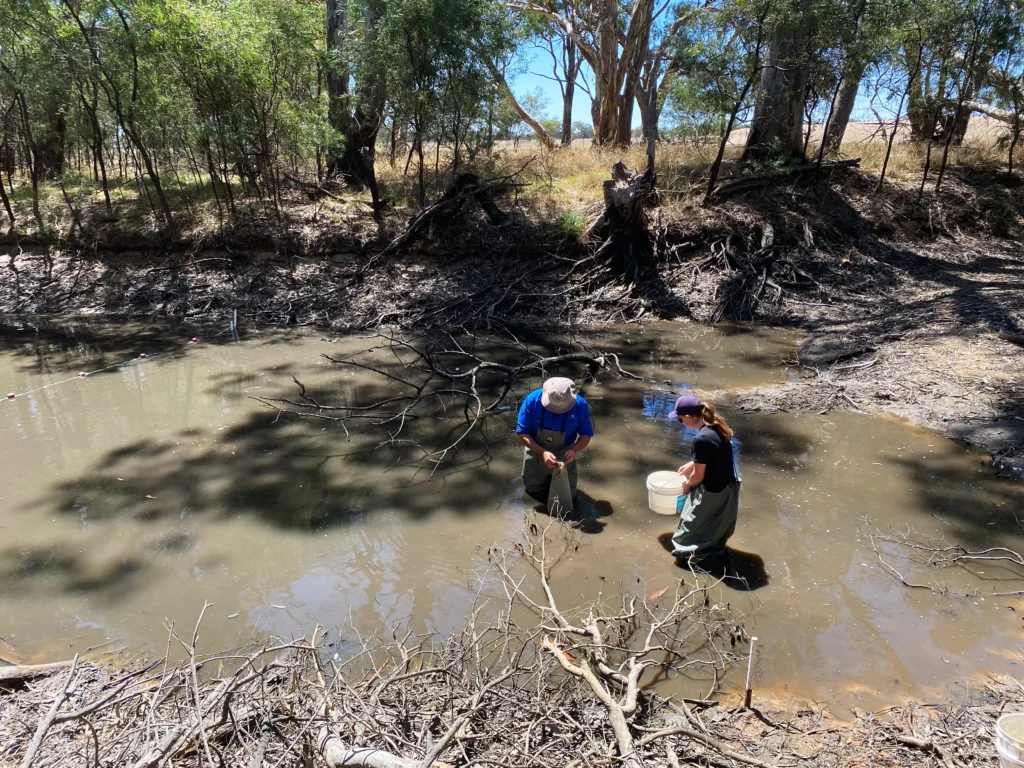
Fish Translocation in February 2025 in the Lower MacKenzie River
Wimmera CMA is working with GWM Water, to develop projects connecting stock and domestic pipeline supply to drought-refuge pools.
The move combines innovation, adaptation, science, community and Traditional Owner knowledge to protect environmental and socio-economic assets with limited water. Environmental water allocations, although limited by diminished inflows, have been primary tools in achieving Wimmera waterway health and resilience objectives through drought conditions.
We identified that pipelines, free of water-loss issues, could provide an efficient alternative to waterway flows as a source of water supply – until regular flows returned after drought.
Wimmera drought-refuge pools can maintain ecological values and increase wildlife resilience until rain returns. But the longer dry conditions continue, the harder it becomes to supply and maintain them with waterway flows.
Projects developed in the past 12 months include preparation and planning of pipeline watering points in lower and upper reaches of key Wimmera waterways.
Construction of connections to lower Wimmera River refuges, co-funded by VEWH, and upper Mt Cole Creek, with DEECA funding, is underway. We also launched a feasibility study for MacKenzie River-Burnt Creek connections as a Water Cycle Adaption Plan priority project.
Preliminary assessments for an upper Wimmera River project based on plans for a new pipeline has been completed.
Tracking alongside these efforts has been targeted monitoring and fish-salvage or pest-removal and adaptive outcome-driven water-management programs.
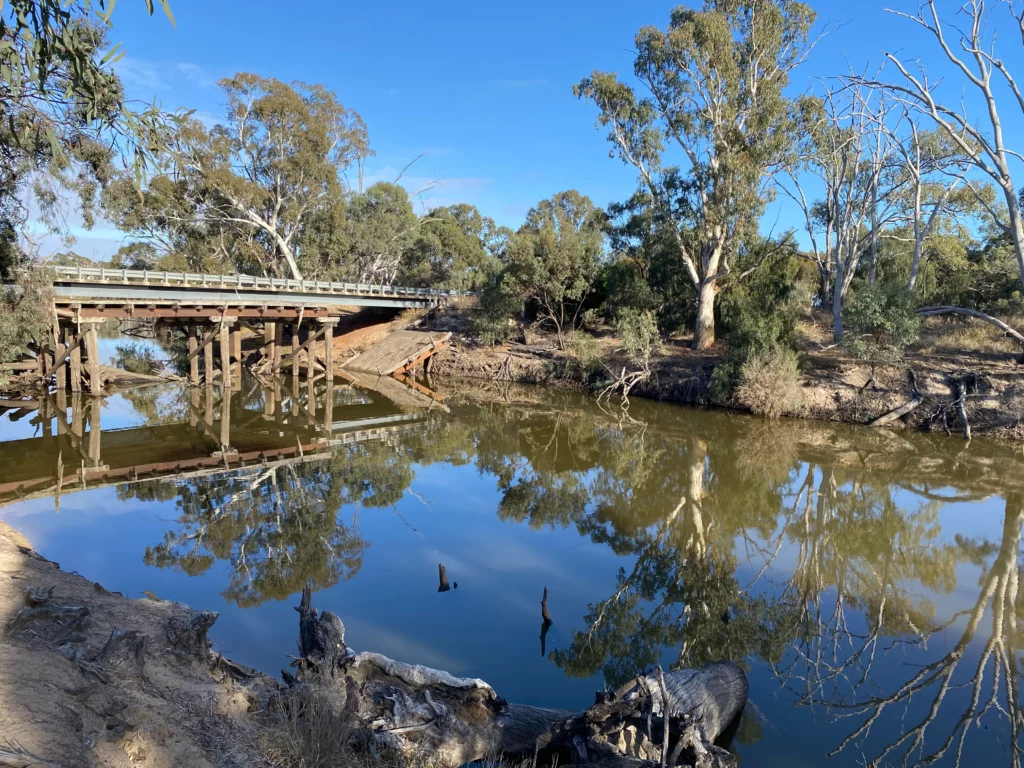
Drought refuge pool site
We have provided leadership in Wimmera Integrated Water Management that has led to new water sources becoming available in the region. An example is an integrated approach in Horsham to use recycled water for the benefit of agricultural research, community green-space reserves and emerging industry.
We have also helped five municipal councils, creating a community ‘priority green spaces’ audit for when drought starts to impact urban supply. This work has provided a foundation and guiding document to allow appropriate community decisions on how best to manage and use future restricted water allocations.
Together, these initiatives demonstrate a coordinated, forward-looking response to prolonged drought in the Wimmera, combining infrastructure innovation, adaptive water management and strong partnerships to safeguard critical environmental, cultural and community assets. By supplementing limited environmental water with efficient pipeline solutions, targeted refuge protection, and integrated water planning, Wimmera CMA and our partners are strengthening ecosystem resilience while supporting regional socio‑economic needs. Ongoing construction, feasibility planning, monitoring and community-led prioritisation ensure actions remain evidence-based and responsive as conditions evolve. Collectively, this work is building a more resilient water future for the Wimmera.