Beneath the Surface: 2025 Wimmera River Fish Snapshot
2025 Native Fish Report Card: Wimmera River
Download: Native Fish Report Card- Wimmera River 2025 PDF 7.5MB DOCX 3.27B
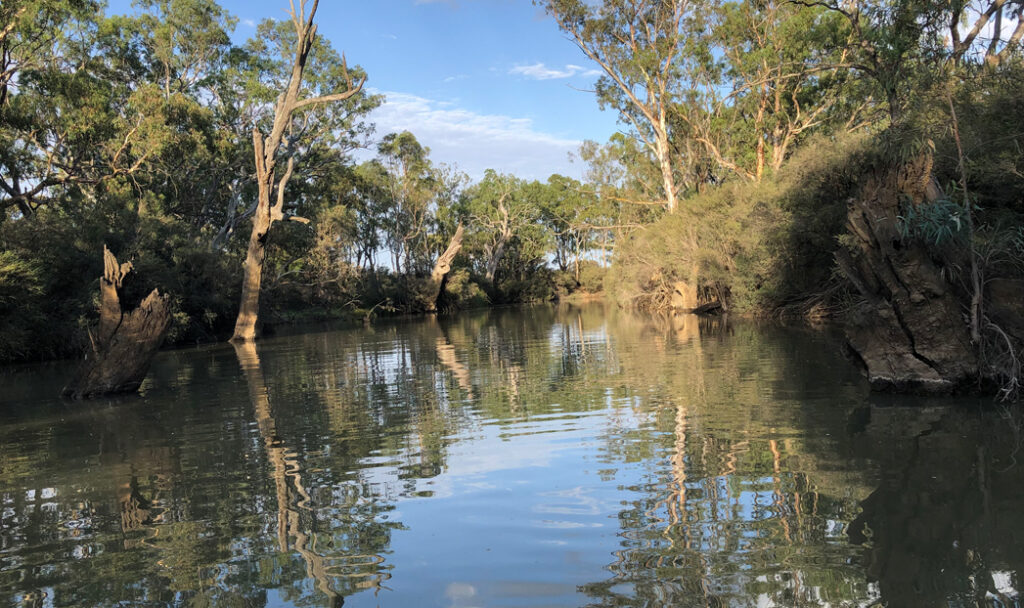
Wimmera River
📸 ARI
Overview
The 2025 Native Fish Report Card provides a detailed snapshot of how fish communities in the Wimmera River are responding to environmental conditions, flows, and ongoing management actions. Surveys completed at nine sites—from Drung Drung to upstream of Lake Hindmarsh—show continued change within a system shaped by natural variability, historic translocations, and targeted recovery efforts.
This year saw record Golden Perch abundance, while Freshwater Catfish remained at very low levels. Small‑bodied native species continue to persist across the system, alongside several exotic species. Low‑flow conditions were once again a feature across the survey period, influencing fish distribution.
Key Findings
- Golden Perch abundance reached its highest level in the nine-year NFRC dataset.
- Freshwater Catfish detections remain very low, with only two adults recorded.
- Small‑bodied natives—Australian Smelt and Flatheaded Gudgeon—were detected across all survey years, indicating ongoing resilience.
- Translocated Silver Perch and Murray Cod continue to appear at low levels, supported by long‑term stocking programs.
- Carp, Goldfish, Redfin and Eastern Gambusia remain widespread across the river.Persistent low flows shaped fish movement and site‑specific abundances, particularly near drying wetlands such as Lake Hindmarsh.
- Threatened species recovery actions, including hatchery‑bred River Blackfish releases, continue to support the long‑term health of the catchment.
Species Highlights
– Golden Perch (Macquaria ambigua)
- Population Structure: Showed a strong population health with recent recruitment and multiple size classes present.
- Stocking Efforts: The population is highly supported by ongoing large‑scale stocking, with record numbers added in 2025.
- Abundance: Golden Perch reached their highest abundance in nine years, with 116 fish recorded.
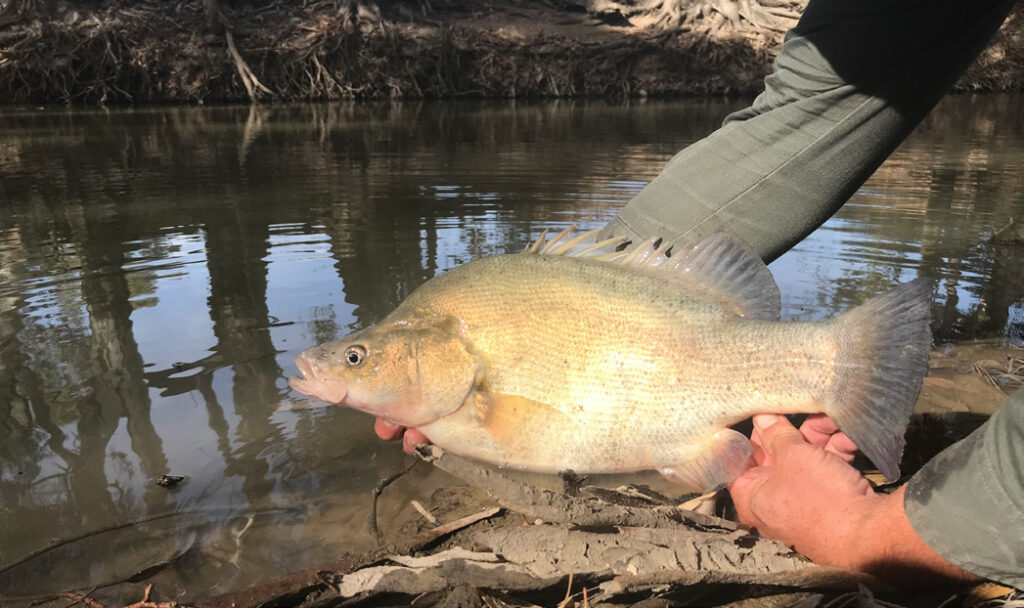
Golden Perch
📸 ARI
– Freshwater Catfish (Tandanus tandanus)
- Population Structure: Remaining extremely scarce, with only two adults detected and no measurable recruitment.
- Challenges: Low abundances make it difficult to determine key health indicators for this species.
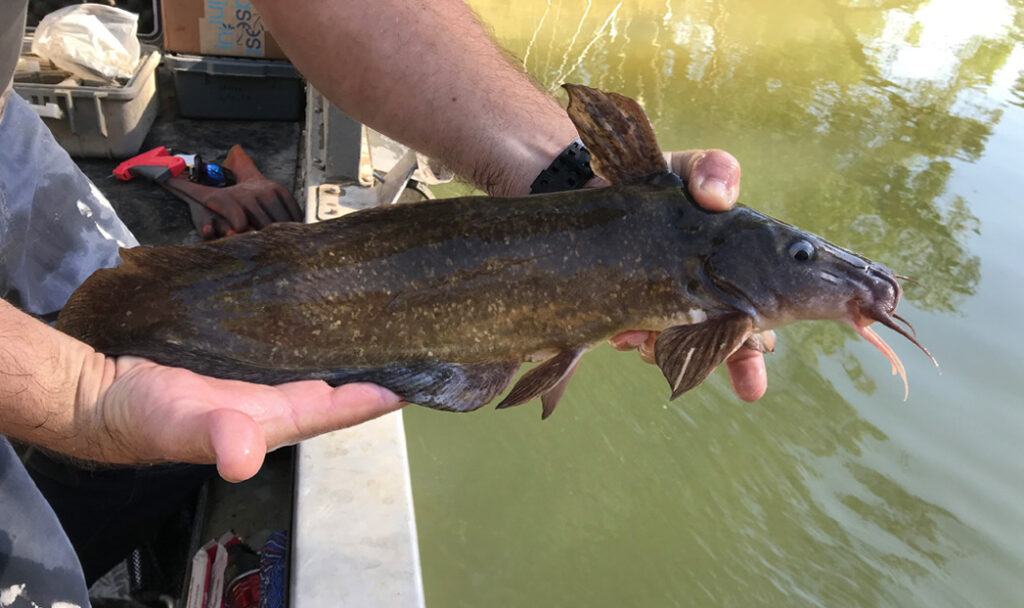
Freshwater Catfish
📸 ARI
Non-Target Species
- Large-Bodied Natives:
- Silver Perch were detected in 8 of 9 surveys. Recent stocking figures remain high, with 78,000 fish stocked in 2025.
- Murray Cod were consistent with previous low‑level detections.
- Small-Bodied Natives:
- Australian Smelt and Flatheaded Gudgeon continue to be recorded every year.
- Common Galaxias detected again in 2025; likely entering via water transfers.
- Exotic Species: Common Carp, Goldfish, Redfin and Eastern Gambusia remain widespread across survey locations.
Environmental and Management Context
Low‑flow conditions persisted across the entire survey period, with extremely low water levels at sites such as Lake Road. These conditions influenced fish movement and created refuge‑seeking behaviour among species such as Golden Perch.
Wimmera CMA and partners are continuing major recovery programs:
- The River Blackfish Recovery Project reached a milestone in 2025, with hatchery‑bred juveniles released into Wimmera River tributaries — an Australian first!
- Ongoing efforts support Southern Pygmy Perch and other small‑bodied natives, including salvage operations in the drying MacKenzie River.
- Investigations continue into the environmental triggers that may support Golden Perch breeding, following natural spawning signs observed in Horsham in 2022.
These projects reflect the priorities of the 2022 Wimmera Native Fish Management Plan aiming to strengthen the resilience and diversity of native fish populations across the catchment.
Conclusion
The 2025 survey results highlight a river system undergoing ecological shifts, influenced by climate variability, stocking history, and restoration efforts. Golden Perch are thriving, while Freshwater Catfish remain scarce. Native small‑bodied species show ongoing resilience, and management actions continue to play a crucial role in supporting threatened species and improving river health.
The long‑term monitoring program provides the insights needed to guide meaningful action—helping ensure the Wimmera River continues to support diverse and healthy fish communities into the future.