Strong Currents of Recovery: Wimmera River Fish Surveys 2018-25
Native Fish Report Card (NFRC) review of 2018-2025 findings
- NFRC Wimmera River 2025 – PDF 7.5MB DOCX 3.2MB
- NFRC Wimmera River 2024 – PDF 8.0MB DOCX 8.0MB
- NFRC Wimmera River 2023 – PDF 7.0MB DOCX 7.0MB
- NFRC Wimmera River 2022 – PDF 4.9MB DOCX 983KB
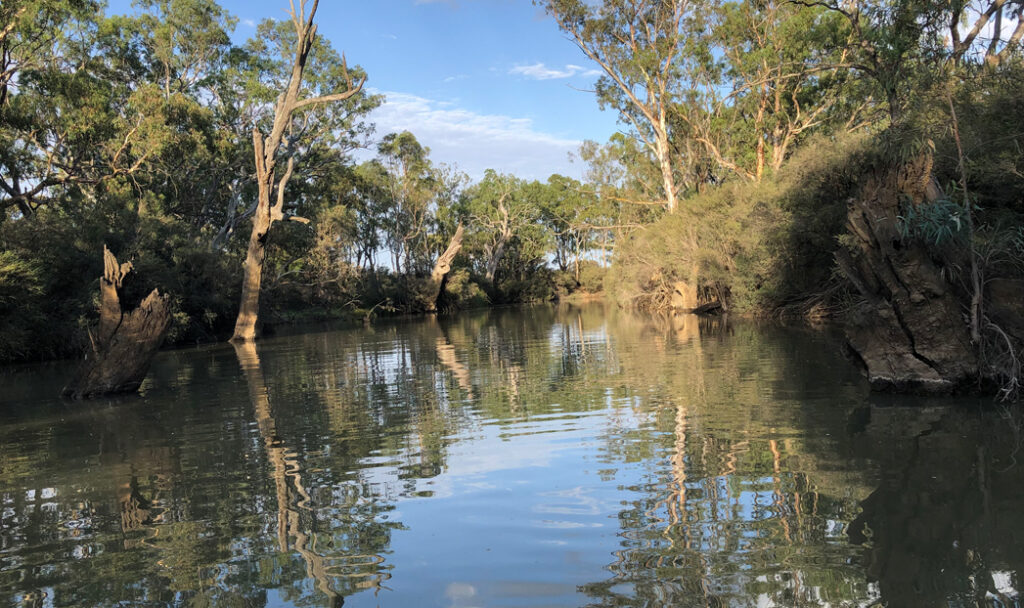
Wimmera River
📸 ARI
Overview
The eighth round of fish surveys for an angler report card were undertaken in January 2025.
The NFRCs provide an up‑to‑date picture of how the Wimmera River’s fish communities are tracking and highlights the impact of local conditions, environmental change, and ongoing management efforts. Surveys across nine sites—from Drung Drung through to upstream of Lake Hindmarsh and the NFRC noted persistent low‑flow conditions across all recent seasons.
The Wimmera River fish monitoring story shows a strong upswing in 2025: total counts rose 53% year‑on‑year (from 633 in 2024 to 971 in 2025), driven by surges in Flathead Gudgeon (352) and Australian Smelt (169). Native species (including translocated natives) made up 66.5% of detections, while exotics accounted for 33.5%.
Highlights
- Golden Perch momentum continues with counts climbing 39 → 50 → 99 → 120 (2022–2025). NFRC reports the highest abundance in 2025, with recent recruitment detected and a broad size range present—likely reflecting intensified stocking (e.g., 240,750 fish stocked in 2025, with 65,000 after surveys).
- Small‑bodied natives pop in 2025.
- Flathead Gudgeon spiked from 1 (2024) to 352 (2025).
- Australian Smelt rebounded from 2 (2024) to 169 (2025).
- Exotics improved slightly overall. European Carp fell -198 year‑on‑year (from 429 to 231), while Goldfish and Redfin remained widespread. Eastern Gambusia re‑appeared in 2025 after being absent in 2024, consistent with NFRC’s “widely distributed” characterization over most years.
- NFRC highlights on‑ground recovery actions from Wimmera CMA, DEECA and VFA efforts—from stocking Silver Perch and Murray Cod, to the River Blackfish Recovery Project (first hatchery‑bred releases to Wimmera tributaries in March 2025)—as part of the Wimmera Native Fish Management Plan.
Challenges
- Low flows persisted in all NFRC sampling years; in 2025 some sites (e.g., Lake Road) were extremely low, concentrating fish and complicating trend interpretation (e.g., Golden Perch accumulation near deeper water while Lake Hindmarsh dried).
- NFRC notes electrofishing under‑detects recruits, especially for Freshwater Catfish and sometimes Golden Perch; fyke nets historically detected recruits more consistently (2018–2019). This can limit health‑indicator certainty year to year.
- Due to translocated population management: Golden Perch, Silver Perch, Murray Cod and Freshwater Catfish are outside their natural range in the Wimmera. Balancing stocking, angling outcomes and ecosystem recovery for small‑bodied natives requires continued coordination.
- Invasive pressures remain, as Carp, Redfin, Goldfish and Gambusia are widespread and resilient; despite a 2025 dip in Carp, overall exotic presence still represents one‑third of detections.
Specific Wimmera River Fish Diversity number results over the years
| Fish | 2018 | 2019 | 2020 | 2021 | 2022 | 2023 | 2024 | 2025 |
| Australian Smelt | 40 | 2 | 169 | |||||
| Golden Perch | 41 | 38 | 21 | 35 | 39 | 50 | 99 | 120 |
| Freshwater Catfish | 2 | 4 | 6 | 1 | 4 | 7 | 2 | |
| Flathead Gudgeon | 29 | 1 | 352 | |||||
| Goldfish | 49 | 28 | 16 | |||||
| Redfin | 46 | 62 | 66 | 48 | 60 | |||
| Silver Perch | 2 | 10 | 0 | 3 | 3 | 34 | 19 | 3 |
| European Carp | 389 | 429 | 231 | |||||
| Eastern Gambusia | 42 | 18 |
Conclusion
The NFRCs over the past 8 years for the Wimmera River show strong results and measurable progress in managing and rehabilitating fish populations. Native species—especially Flathead Gudgeon, Australian Smelt, and Golden Perch—made significant gains, with Golden Perch reaching their highest NFRC abundance yet, reflecting successful stocking and emerging recruitment. At the same time, a decline in European Carp suggests positive movement in managing invasive species.
Ongoing rehabilitation programs, habitat improvements, and major initiatives like the River Blackfish Recovery Project are clearly making an impact, contributing to healthier and more resilient fish communities. Overall, the Wimmera River is showing encouraging recovery, demonstrating that sustained, coordinated management efforts are working.
We will continue our strategic management and partner collaborations to achieve our vision of a thriving and diverse fish community in the Wimmera River.